
1. Anatomical Dynamics of the Thick Skin Envelope
The defining challenge in ethnic rhinoplasty is the disproportion between the heavy soft tissue canopy and the delicate underlying osseocartilaginous framework. Thick, glandular skin possesses a dense subdermal fibroadipose layer that effectively masks the underlying skeletal anatomy. Consequently, standard cartilage resection techniques often fail, leading to a bulbous, amorphous tip as the heavy skin collapses the weakened framework.
To achieve definition, the surgical paradigm must shift from volume reduction to structural expansion. By increasing the projection and rigidity of the nasal tip, the thick soft tissue envelope is placed under tension, effectively "shrink-wrapping" the skin to reveal the newly crafted cartilaginous angles beneath.
2. Core Ethnic Rhinoplasty Pillars
To examine the foundational surgical protocols applied in ethnic rhinoplasty suites without requiring horizontal table scrolling on mobile screens, essential clinical pillars are structured into responsive cards below:
Clinical Standard: Utilizing robust autologous grafts (costal or advanced septal extension) to create a rigid foundation capable of supporting a heavy skin envelope.
Clinical Standard: Careful excision of excess fibroadipose tissue beneath the nasal tip skin, meticulously preserving the subdermal vascular plexus to prevent necrosis.
Clinical Standard: Combining sill excisions and internal cinching sutures to narrow excessive alar flare while maintaining natural nostril curvature and airway patency.
Clinical Standard: Mandating extended nocturnal taping and highly targeted corticosteroid micro-injections to mitigate intense fibroblastic activity and scar tissue formation.
Journey with Confidence
Your health and well-being are our priority. Experience world-class medical excellence while exploring the wonders of Istanbul.

Acıbadem Hospitals Group:
Global Excellence in Healthcare
While you immerse yourself in the rich history of Istanbul, your well-being is protected by a future-focused healthcare leader. Acıbadem provides world-class medical services, from comprehensive health screenings to advanced treatments, all delivered with a commitment to your safety and comfort.
Travel with the assurance that you and your loved ones are in the most capable hands.
 Explore Medical Services →
3. Structural Cartilage Projection: Pushing Through the Envelope
Because the lower lateral cartilages in many ethnic noses are inherently flimsy and lack intrinsic strength, they cannot provide the tension required to refine a thick soft tissue envelope. To overcome this, facial plastic surgeons must over-engineer the nasal tip support mechanism. This is predominantly achieved through the use of septal extension grafts or costal (rib) cartilage struts.
By securing a rigid, carved piece of autologous cartilage to the caudal septum, the surgeon creates an immovable central pillar. The native tip cartilages are then advanced and sutured onto this pillar. This maneuver actively pushes the tip forward, stretching the thick skin to reveal geometric definition that cannot be achieved through cartilage resection alone.
4. Sub-Dermal Defatting and Alar Base Modification
To further unburden the nasal tip, surgeons may perform sub-dermal defatting. This delicate procedure involves conservative excision of the fibroadipose SMAS layer situated between the medial crura and the skin. The critical safety limit here is the preservation of the subdermal vascular plexus; over-resection risks ischemia and irreversible skin necrosis.
Additionally, a widened alar base (nostril flare) is a common functional and aesthetic concern. Surgeons address this using geometric wedge excisions at the nostril sill and alar crease, often combined with an internal cinch suture (running beneath the nasal spine) to pull the alar lobules medially, harmonizing the nasal width with the medial canthal lines of the eyes.

5. Managing Prolonged Edema: Steroids and Fibroblastic Control
The postoperative healing timeline for thick-skinned ethnic rhinoplasty is notably protracted. The sebaceous skin acts as a sponge, retaining lymphatic fluid and triggering aggressive fibroblastic (scar tissue) proliferation in the "dead space" above the newly defined cartilages. Without proactive management, this results in a soft tissue pollybeak deformity.
Clinical management demands a strict regimen of nocturnal mechanical taping for several months to compress the dead space. When localized induration occurs, surgeons intervene with precise, dilute micro-injections of Triamcinolone acetonide (Kenalog) in the supratip region. These corticosteroids melt away developing scar tissue and arrest inflammation, ensuring the hard-won structural definition ultimately translates to the skin surface.
In ethnic rhinoplasty, the illusion of a smaller, more refined nose is paradoxically achieved by adding volume. By increasing projection and building the bridge height, the skin is stretched taut, creating light-reflecting angles that make the nose appear aesthetically narrower.
Enrich Your Exploration
Enhance your medical journey with our hand-picked partners offering luxury stays and seamless travel in Turkiye.
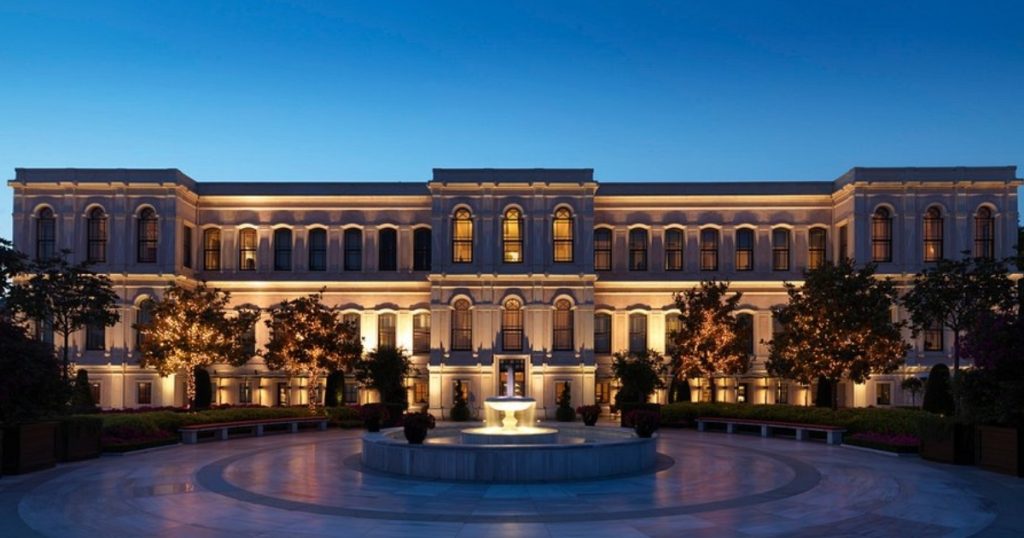
Four Seasons:
Bosphorus, Perfected
Escape the city's vibrant pulse to a serene waterfront palace. Here, timeless elegance and flawless service create your perfect moment.
 Book Your Escape →

Garenta:
Discover More of Turkiye
Don't just see the landmarks; experience the real culture. Garenta offers the freedom to discover hidden treasures at your own pace.
 Get Your Car →
Academic References & Data Sources
- Facial Plastic Surgery Clinics of North America: Structural Approaches to the Ethnic Nose: Grafting Strategies and Soft Tissue Management.
- Plastic and Reconstructive Surgery: Alar Base Reduction and Cinch Sutures in Ethnic Rhinoplasty.
- Aesthetic Surgery Journal: Managing the Thick Skin Envelope: The Role of Subdermal Defatting and Corticosteroid Injections.